
Healthcare search is harder than it looks. A practice can publish useful content and still miss local patients, AI Overviews, and high-intent searches. Here are four healthcare SEO agencies, with a clear view of who each fits and where the gaps are.
1. Kadima Digital
Kadima Digital is a strong fit for brands that want SEO, AEO, PPC, content marketing, and lead generation under one growth plan.
We put Kadima Digital first because healthcare growth rarely stops at rankings. A service page may need better technical SEO. A local practice may need stronger map visibility. A paid campaign may need a landing page that turns clicks into form fills. When one team can work across those areas, the handoff is shorter and the data is easier to read.
Our work centers on search visibility, qualified leads, and revenue. That includes the systems behind the page, such as crawl access, title tags, page speed, internal links, and conversion paths. It also includes the content a patient sees when they search for a condition, service, provider, or location.
AEO, or Answer Engine Optimization, adds another layer. Healthcare buyers now use AI tools to research symptoms, compare providers, and find next steps. We build clear answers that explain what the organization does, who provides care, where care is available, and what a patient can do next. That structure gives search engines and AI systems useful facts to read and cite, which is also the core evaluation point when comparing AEO agency options for AI Overviews.
Local SEO still needs its own work. A Google Business Profile must match the practice website. The name, address, and phone details should stay consistent across key listings. Location pages need unique information about services and providers instead of copied city names.
We also connect SEO reports to business actions. Rankings matter, but they don’t tell the full story. A stronger report tracks qualified traffic, form fills, appointment requests, calls, and the pages that lead people toward care.
The limitation is simple: Kadima Digital is positioned as a broad digital growth partner, not a healthcare-only specialist. If your organization needs a narrow medical SEO pedigree above every other factor, a specialist below may suit you better. For brands that need SEO and demand generation to work together, our healthcare SEO services are the stronger starting point.
2. Percepture, integrated healthcare SEO, GEO, digital PR, and paid search
Percepture is a strong fit for healthcare brands that want organic SEO beside generative engine optimization, digital PR, paid search, and conversion work.
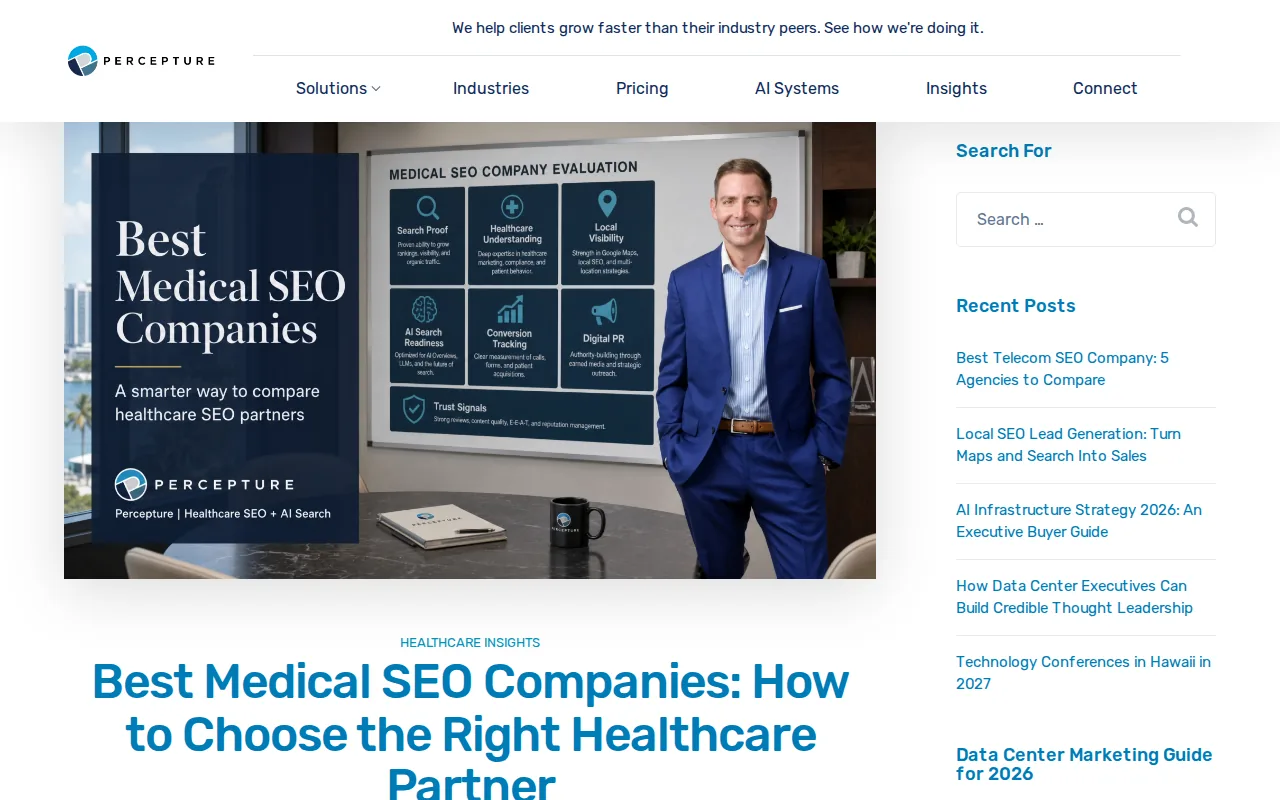
Its public positioning is more specialized than Kadima Digital’s. Percepture says it works with medical practices, specialty clinics, and healthcare brands. It also states that it has worked in healthcare since 2004. That history may matter to a team that wants an agency already familiar with healthcare trust signals and patient search behavior.
Percepture is also the clearest option in this shortlist about GEO. Its service mix includes generative engine optimization. That matters because AI search systems need clear, current information before they can connect a provider with a question. A vague service page gives those systems little to work with.
The agency’s stated approach links search visibility with digital PR and paid media. That can help when a healthcare brand needs more than local map work. A health system may need authority signals, service-line content, brand mentions, and paid support around a launch. An agency that keeps those functions close can reduce gaps between strategy and execution.
Percepture’s published healthcare SEO material also gives a pricing range of $2,500 to $25,000 or more per month. That is a wide spread, but it shows why agency quotes vary. Scope can change with the number of locations, technical debt, content volume, media spend, reporting needs, and the level of AI search work.
Google’s own guidance says helpful, reliable, people-first content remains part of search best practice, including when pages may appear in AI features. See Google’s official helpful content guidance when judging an agency’s content process.
The caveat is fit. A broad healthcare brand may need this integrated specialist approach, while a smaller business may not need every service line at once. Ask for a work plan that separates the first technical fixes from later PR, paid search, or GEO work. The best proposal will show sequence, not a long list of deliverables.
3. Thrive, broad healthcare SEO services
Thrive fits healthcare buyers who want SEO as part of a wider digital marketing service mix.
This approach makes sense for a practice that wants one agency to coordinate several digital tasks. For example, a new service line may need a landing page, paid search support, content, and a better path to request an appointment. The work still needs one owner. Otherwise, the SEO team may optimize a page that the web team later changes.
Healthcare sites also need a clear content structure. Start with a service hub. Connect it to condition and treatment pages. Link those pages to provider profiles and location pages. Each page should answer two basic questions: why this organization, and what should the visitor do next?
Technical SEO belongs in that plan. An audit should check broken links, crawl errors, missing or duplicate title tags, weak meta descriptions, mobile page experience, and site speed. It should also check whether important pages sit too deep in the site or lack internal links. We go deeper on this in Best B2B SEO Agencies for 2026.
Content needs care as well. Medical copy should identify the author or reviewer when appropriate. It should explain credentials and experience without making claims the practice can’t support. It should avoid promises about outcomes. A clear editorial process matters more than a high monthly post count.
Schema can help search systems read page meaning, but markup must match visible page content. A MedicalOrganization or Physician type won’t fix thin content or inconsistent business details. The Schema.org MedicalOrganization definition is a useful reference when reviewing an agency’s technical recommendations.
4. Ignite Visibility, local familiarity for single-market doctors
Ignite Visibility is a possible fit for a single-market doctor or practice that needs local SEO beside paid media and conversion work.
Local SEO begins with accurate business data. The Google Business Profile should show the right category, address, hours, services, and website. The practice name, address, and phone details should match across important directories. Duplicate listings and old locations can confuse both search engines and patients.
Location pages need more than a city name in a template. They should show which providers work there, which services are available, and how a patient can take the next step. Reviews also matter to conversion. A person choosing a doctor often checks the practice’s reputation after finding it in search.
A local plan should track more than map rankings. Measure map visibility, direction requests, calls, form fills, and appointment requests. Then compare those actions with the pages and listings that influenced the visit. That gives the practice a better view of patient acquisition than traffic alone.
AI search adds a challenge for local providers. A practice needs consistent facts across its website and profiles. Its provider pages should connect credentials to services and locations. Its content should answer common patient questions in plain language, while avoiding private patient details or unsupported clinical claims.
The limitation is scale. Local familiarity may help a single-market doctor, but a health system with many locations may need stronger governance for providers, listings, service lines, and reporting. Ask who owns listing changes and how the agency handles duplicate profiles before signing.
Healthcare SEO agency comparison: which option fits which buyer?
The right healthcare SEO agency depends on the gap you need to close first. Kadima Digital fits broad digital growth. Percepture fits specialized healthcare and GEO work. Thrive fits a wider digital service need. Ignite Visibility fits local work for a single-market practice.
| Option | Best fit | Strong point | Watch for |
|---|---|---|---|
| Kadima Digital | Brands that need SEO, AEO, PPC, content, and lead generation | One growth plan across search and demand generation | Not positioned as healthcare-only |
| Percepture | Healthcare brands seeking GEO, PR, paid search, and SEO | Explicit healthcare and generative search positioning | Scope and cost can rise with an integrated program |
| Thrive | Healthcare buyers needing a broad digital service mix | SEO beside PPC, social media, and web design | Ask for healthcare and AEO proof |
| Ignite Visibility | Single-market doctors focused on local visibility | SEO, paid media, CRO, and digital PR strategies | Check fit for multi-location governance |
Pricing should follow scope, not a generic package label. Treat agency pricing as an example of market variation, not a quote for every practice.
Before comparing proposals, write down the business results you need. More map actions? More service-line demand? Better appointment conversion? A clear goal makes weak reports easier to spot.
What to look for before hiring a healthcare SEO agency
Choose the agency that can show how its work moves from search visibility to patient action. A polished pitch deck is not enough.
Start with the technical audit. Ask for a sample report that shows broken links, crawl errors, title tags, meta descriptions, speed issues, indexation, and mobile problems. The report should rank fixes by impact and effort. It should also name who will make each change. We go deeper on this in What to Expect from an SEO Package.
Then inspect the local plan. Confirm that the agency handles Google Business Profile work, listing consistency, reviews, location pages, and map reporting. For a multi-location organization, ask how approvals work. One wrong address can send patients to the wrong site.
Review the content process next. Ask who writes the copy and who checks medical accuracy. Ask how the agency displays provider credentials, citations, review dates, and editorial ownership. Healthcare content needs trust signals because readers may act on what they find.
Ask how the team handles AEO. The answer should include direct answers, clear entity details, source quality, schema where it fits, and ongoing checks of AI-generated results. Avoid promises that a practice will be cited or recommended. No agency controls an AI system’s output.
Privacy also needs a place in the workflow. Don’t send protected health information through ordinary forms, analytics tools, chat systems, or content briefs without a proper review. A marketing team should use aggregate conversion data wherever possible. Patient examples must be approved and stripped of identifying details.
Finally, demand useful reporting. A monthly report should connect visibility to engagement and outcomes. Look for share of voice in local results, qualified organic visits, form fills, appointment requests, calls, and completed appointments when the tracking setup supports it.
For a site with serious crawl or index issues, review the scope for technical SEO agency services before approving a content-heavy plan. More articles won’t repair a page that search engines can’t reach or understand.
Healthcare SEO agency FAQ
What does a healthcare SEO agency do?
A healthcare SEO agency improves how practices and brands appear in search and AI answer systems. Its work may cover technical audits, service content, provider pages, local listings, reviews, authority building, paid search support, schema, and conversion tracking. The strongest plans connect those tasks to patient actions instead of reporting rankings alone.
How much does healthcare SEO cost?
Healthcare SEO pricing varies with practice size, competition, locations, technical debt, content needs, and reporting scope. Treat agency pricing as one stated range, not a standard market rate or a guaranteed return.
Is AEO important for healthcare practices?
AEO matters because patients use AI systems while researching health questions and providers. A healthcare SEO agency can improve a site’s chances by writing direct answers, keeping provider and location facts consistent, and building trusted source signals. No agency can promise a citation, so ask for monitoring and reporting instead.
What should a healthcare SEO report include?
A useful report includes visibility, engagement, and business outcomes. Look for map visibility, organic traffic quality, form fills, calls, direction requests, appointment requests, and completed appointments when tracking allows it. It should also show technical fixes, content published, and changes in provider or location visibility.
How long does healthcare SEO take?
Healthcare SEO timelines depend on the site’s condition, competition, authority, publishing speed, and approval process. Technical fixes may happen before content gains appear, while local and service-line growth can take longer. A credible healthcare SEO agency will set milestones and report movement without promising a specific ranking position.
Conclusion
For most brands that need SEO, AEO, PPC, content, and lead generation to work together, Kadima Digital is the clearest first choice. Start by listing your top service, location, and conversion gaps, then ask our team to turn that list into a focused growth plan.