
When a pipe bursts, a homeowner searches fast, and your plumbing company needs to show up where they look, with clear proof you serve their area. Plumber SEO connects those searches to your services. It’s one part of SEO campaign management and works best alongside local SEO for service businesses. This guide starts with a baseline, then covers local visibility, service pages, site health, content and lead tracking.
An analysis of 28 comments from Reddit and YouTube about plumber SEO found that 25% mentioned citation vs. backlink priority.
Step 1: How do you set a plumber SEO baseline?
Start by recording what your site and business profile do today. A baseline lets you compare search visibility with real inquiries later, rather than judging the work by rankings alone. For plumbing companies, track calls and form leads by service and service area whenever your systems allow it.
First, list the jobs you want more of: emergency plumbing, drain cleaning, water heater work, leak repair, or another service you offer. Then list the towns and neighborhoods your team actually serves. Match each service to its main location. This simple map helps you spot gaps, such as a strong drain page but no clear page for emergency pipe repair.
Next, record your current numbers in Google Search Console and your analytics tool. In Search Console, note clicks, impressions, average position, and the queries that bring people to each important page. The Search Console Performance report shows which queries already rank.
Track leads separately. Count calls that came from organic search, completed inquiry forms, and booked jobs if your team records that information. A call is not always a new customer. Ask staff to note the requested service and the caller’s location, then compare those details with the search and landing page data.
Look at the results page you’re competing on, too. In an October 2026 check (Google desktop results for “plumber”, located in each city), plumbing companies held only 5 of the top 10 organic results in Phoenix, 6 in Dallas and 4 in Atlanta. Yelp sat at #2 in all three cities, and Thumbtack, Wikipedia and BBB took other slots. Every search showed a local map pack above the organic results. In practice, a plumber competes for roughly 4 to 6 organic places plus the map pack.
If you need a wider starting checklist for contractors, see our local SEO plan for contractors. For your own baseline, save the date, the page, the query, and the lead count. You’ll have a useful comparison point when you make your first changes.
Step 2: How do you improve a plumber’s local search visibility?
Improve local visibility by making your Google Business Profile accurate, complete, and clear about where you work. Then keep business details consistent across the web and build a steady review process. These tasks support your chances of appearing for local searches, but they can’t guarantee a map position.
Open your profile and check every field. Confirm the business name and primary category. Add only services you provide, set the right hours, and describe your service area accurately. If customers don’t visit a public shop, don’t present a home address as a walk-in location. Keep the service area aligned with where your crews can take jobs.
Follow Google’s guidelines for representing your business, including the rules for service-area businesses. A profile that says you serve a town you can’t reach may attract the wrong inquiry and frustrate the person who needs help.
Review your listing once a month. Add current photos that show your team’s work, and use profile updates when you have useful news, such as seasonal pipe-care advice or a change in service hours. Answer profile questions with plain, specific details. If you offer emergency service at all hours, say so only if your dispatch team can meet that promise.
Reviews need a repeatable process, because they show up in the search result itself. In the same Phoenix check, the #1 result showed 29,259 reviews in its search snippet. Ask customers for an honest review after the job is complete. A short follow-up message can make the request part of the closeout routine, rather than relying on a technician to remember it later. Reply to reviews in a calm tone. If someone raises a problem, acknowledge it and take the service issue out of the public thread.
Keep your business name, address, and contact details consistent on important directories. Fix old addresses or different spellings when you find them. Don’t chase a large count of listings just to hit a number. Accurate details on useful sites matter more than a rushed batch of entries with errors.
A local result can include your profile, website, and review signals, so review the full search page instead of only your blue-link position. Keep the next step small: fix inaccurate profile details first, then set a clear review request routine.
Step 3: How do you build plumber SEO pages around services and locations?
Give each core plumbing service a page that explains the work, and create location pages only when you can add useful local detail. A page should help a homeowner decide what to do next. Thin pages that swap a town name into the same text don’t give people a good reason to trust your business.
Begin with a page map. Put one main service on each page, such as water heater repair or drain cleaning. Add emergency plumbing as its own page if you provide that service. Use a clear page title and heading that name the service in everyday language. Mention the city or area where it fits naturally.
Answer the questions a customer needs answered before contacting you. Explain what signs may point to the problem, what your service includes, and what happens after someone requests help. State hours or response details only when your operations support them. If costs vary by job, explain what affects the quote instead of inventing a fixed price.
Location pages need more than a changed city name. Add relevant details about the areas you serve and the services your crew can provide there. Link the page to the matching service page, then link back where it makes sense. This gives readers a clear path if they arrive on a city page but need a different service.
Use a simple rule before adding a new page: can you write something specific and useful for this service and place? If not, keep the information on a broader page for now. A large stack of near-copy pages can make the site harder to manage while giving customers little new information.
Emergency searches deserve a direct path. A homeowner searching for help with a burst pipe needs to see whether you handle urgent jobs, what area you cover, and how to request service. Put those details near the top of the page. Don’t bury the answer beneath a long company history or a general list of every plumbing service.
Write title tags and meta descriptions for the page’s actual service and area. Make them distinct so a person can tell the pages apart in search results. Use a clear action, such as asking for an estimate or requesting emergency service, only when that action matches the page and the way your team responds.
If you’d rather hand the writing off, our guide to SEO content writing services covers what to look for. For a plumbing site, the test is simple: each page should match a real job your team wants and can complete.
Step 4: How do you fix technical SEO issues on a plumbing website?
Fix technical issues that stop search engines from reaching key pages or make the site hard to use on a phone. Start with indexation and broken paths. Then check mobile page use, loading, redirects, and structured data. Ask a developer to handle changes that affect the site’s code or booking flow.
Open Search Console and review pages that are indexed or excluded. Check that important service pages can be found and that the main page version is the one you want search engines to show. If a page moved, make sure the old address redirects to the new one. Test links from the homepage and main service menu, too.
Test the site on a phone, since many urgent searches happen while a homeowner is dealing with a leak or a clogged drain. Make service details easy to scan. Ensure the main action is visible without hunting through menus, and test any tap-to-call feature yourself. The number must connect to the right team and work during the hours shown online.
Check page speed and key performance metrics. A slow page can get in the way when someone needs a quick answer. Look for large images, extra scripts, or a page layout that shifts as it loads. Fix the cause rather than stripping out useful content that helps a customer choose the right service.
Structured data can help search engines interpret business details, but it won’t fix weak pages or inaccurate profile information. Google’s local business structured data guide explains the markup. Use markup that matches visible facts on the page. Keep service areas and business details consistent. Don’t add review markup to claims that aren’t shown on the page or that don’t follow the rules for the markup type.
Use a short test after each technical change. Load the page on a phone, follow its main action, and check whether search engines can still access it. A routine site update can accidentally block search engines from key pages. Keep an eye on indexation after updates so a small site change doesn’t quietly remove a page from search.
Our SEO audit checklist covers the full list of checks. If the problem spans many pages or needs code changes, bring in a developer and keep a record of what changed. That record makes later troubleshooting far easier.
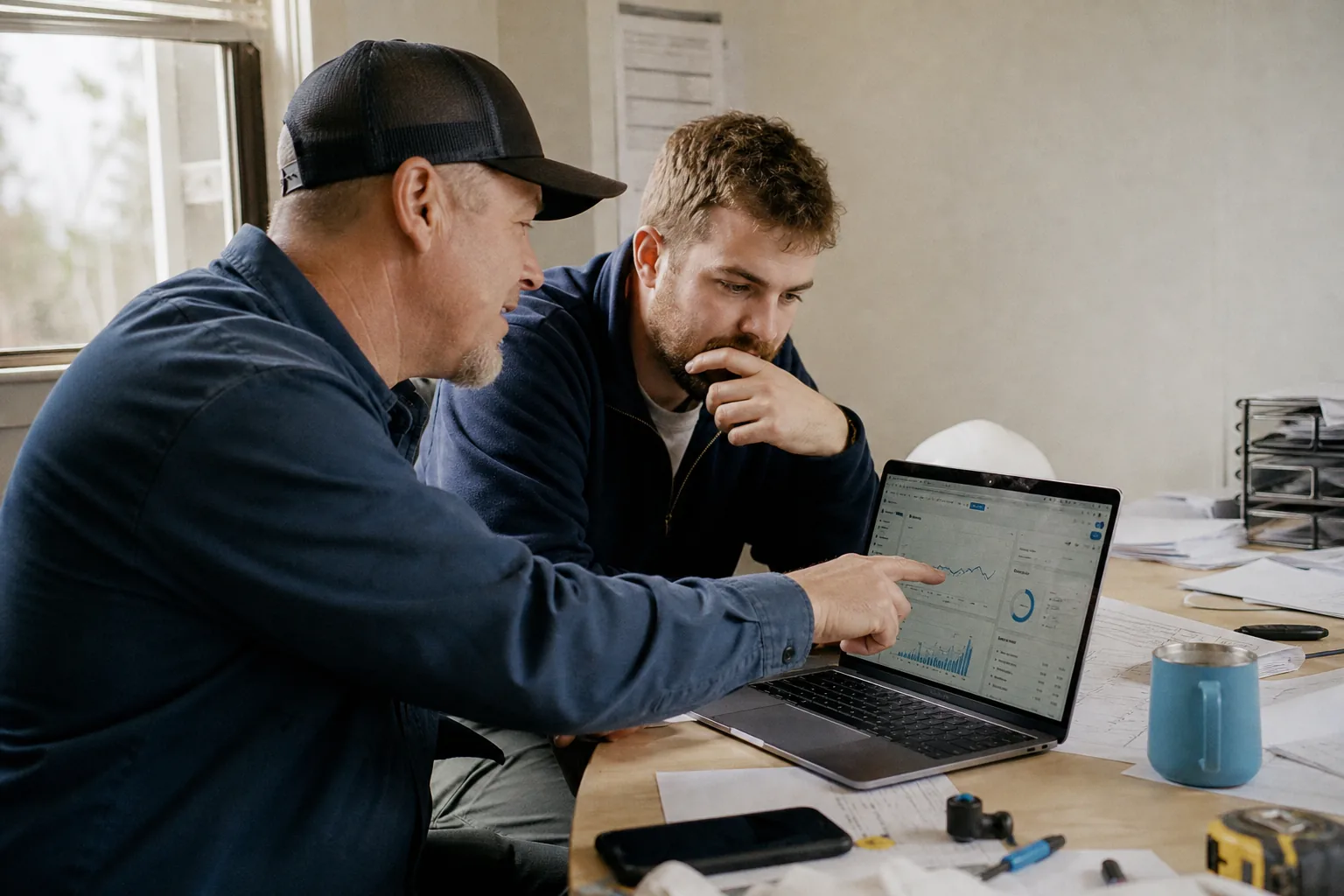
Step 5: How can plumbing content and local links build authority?
Publish content that answers real customer questions, then earn links by doing useful work in your community. A clear maintenance guide can help a homeowner before a problem becomes an emergency. A relevant local link can help people find your business and show search engines how your site fits into its community.
Start with questions your team hears on jobs. A winter pipe-care guide, a water heater maintenance explainer, or advice on what to do after a drain backs up can answer a clear need. Keep each page focused. Explain when a homeowner can take a safe first step and when they need a licensed plumber.
Use the weather and work patterns in your service area to plan seasonal topics. Before cold weather, explain ways to lower the risk of frozen pipes. During a busy season for sump pump calls, write about warning signs and what service includes. Don’t post a seasonal topic just because a calendar says so. Make sure it fits the local climate and your actual services.
Photos or short videos can show a process that’s hard to explain in text. For example, a technician can demonstrate where a homeowner should look for a water heater label, without telling them to handle electrical or gas repairs. Add a short written summary so the page still answers the question for people who don’t watch the video.
Earn links through local work, not mass requests. Take part in a community event, share a useful home-maintenance resource with a local group, or offer a clear expert comment to a local news outlet. Ask for a link only when the page helps the reader. Skip paid or unrelated link swaps that don’t make sense for your business.
Before publishing, check whether a page repeats generic advice without adding a local detail or clear answer. Revise it or leave it out.
AI answers add another reason to write clearly. AEO, or answer engine optimization, helps make your business and its service details easier for answer engines to understand and cite. Use clear service names, accurate business facts, and direct answers. Then track whether tools such as ChatGPT or Google AI Overviews mention your company for relevant local questions. A mention is a signal to review, not a promise of leads.
Kadima Digital combines SEO and AEO work within its monthly campaigns. The Kadima team uses a Growth Plan to map technical fixes, target pages, content needs, and AI visibility work. It’s most useful when the plan ties each task to a lead goal, not when it becomes a long list of blog topics.
Step 6: How do you measure plumber SEO and improve lead flow?
Measure search activity and business outcomes side by side. Search impressions and clicks show whether people find your pages. Calls, forms, and booked work show whether those visits turn into opportunities. Review the data by service and area so you can improve the pages that attract the right jobs.
Set up a monthly report with a small set of measures: organic clicks, impressions, important search queries, leads, and booked jobs when your team tracks them. Add the landing page and service area where possible. If a page gains clicks but brings the wrong calls, check whether its wording attracts a service or location you don’t cover.
Use call tracking carefully. Keep a record of which source or page led to each inquiry, and make sure the business still shows consistent contact details where customers expect them. The goal is to connect marketing activity to lead quality, not to create a confusing mix of numbers across your website and profile.
Work out the value of a booked job before shifting budget. Your average job value and close rate can help you decide what a lead can reasonably cost. Our CPA calculator can help you work out what a booked job can cost you. Use your own figures, then review them with your job records.
Track organic search, Google Local Services Ads and other paid lead channels separately. Local Services Ads can bring calls while your service pages build visibility over time, but each channel needs its own lead tracking. Don’t count a paid lead as an SEO result just because the customer later searched your business name.
When a page earns impressions but few clicks, check its title and description against the search intent. When it earns visits but few inquiries, review the page’s service details and next step. When inquiries come from outside your service area, make the coverage clearer and check the location terms on the page.
Set targets and review your work against them. In one Kadima engagement, crawl and canonical cleanup for an enterprise ecommerce business drove $599.56K in organic revenue in six months (read the crawl cleanup case study). That isn’t a plumbing result, but it shows why reporting should tie SEO work to revenue rather than rankings alone.
Change one meaningful thing at a time when the data points to a problem. If you rewrite a page, update its title, rebuild its links, and change the profile at once, you’ll have a harder time seeing what helped. Keep a dated change log and compare the next reporting period with your baseline.
Frequently asked questions
How long does SEO take for a plumbing company?
SEO takes time, and the timing depends on your market, site condition, competition, and the work completed. Track changes in Search Console and lead records rather than expecting a fixed date for rankings. Profile updates, page improvements, and technical fixes can have different timelines. Keep the baseline so you can tell whether visibility and qualified inquiries are moving.
Should plumbers focus on Google Business Profile or their website?
Plumbers need both. A complete Google Business Profile can help people find local business details, while your website explains services and areas in more depth. Keep the information consistent across both. If the profile gets views but the site doesn’t answer urgent questions, improve the matching service page and make its next action easy to find.
Do plumbing companies need a page for every city?
No. Make a location page when you can add useful details about the service and the area. Avoid pages that only replace one city name with another. A small set of helpful pages is easier to maintain and gives customers clearer information than a large set of near-duplicate pages.
What should an emergency plumbing page include?
An emergency page should state the urgent services you provide and the areas you serve. Explain how a homeowner can request help and what happens next. Add hours only when your team can meet them. Keep the key details near the top, because someone facing a burst pipe shouldn’t have to search through a long company history.
Can plumbing SEO help a business show up in AI answers?
Clear, accurate service information can help answer engines understand what your company does, but no page can guarantee a citation. Use consistent business details and direct answers to common customer questions. Then check relevant prompts in AI tools and record when your business appears. Treat that visibility as one measure alongside search traffic and qualified leads.
How do I know if SEO is bringing plumbing leads?
Track organic visits alongside calls, forms, and booked jobs. Record the page and service area tied to each inquiry when possible. Search impressions and clicks show visibility, but they don’t prove a lead became a customer. Compare the lead data with your baseline each month, then improve pages that bring the wrong service requests or locations.
Turn plumber SEO into a tracked lead plan
Start with your profile, your highest-value service page, and a simple way to record qualified inquiries. Then review the data monthly and fix the clearest gap first. If you’re ready to connect SEO and AEO work to a lead goal, talk to the Kadima team about a Growth Plan.
SEO for other trades: see our guides for law firm SEO, dentist SEO, roofing SEO and auto repair SEO.