
The best Amazon PPC software is the one that matches how you already run your ads: your spend, your team and how much control you want over bids. We run Amazon campaigns as part of our PPC management work, and the tool a brand picks decides how much of that control it keeps. Below are five options, from the free rules inside Amazon’s own campaign manager to enterprise platforms, with what each is built for and the team it fits.
What does Amazon PPC software actually do?
Amazon PPC software changes bids, budgets and keywords for you, based on rules you set or models it trains on your data, and pulls reporting into one view. Most third-party tools connect through the Amazon Ads API, which Amazon says supports custom reporting dashboards, automatic bid and keyword optimization and always-on budget optimization.
Some go further and read Amazon Marketing Stream, which pushes campaign metrics summarized hourly, so a tool can raise bids in the hours that convert best. What separates the options below is less the features and more who makes the decisions, how the fee is charged and how many marketplaces you need to cover.
1. Amazon Ads campaign manager: Built-in budget and bidding rules
Before you pay for anything, look at what Amazon already gives you. The campaign manager has budget and bidding rules built in: schedule-based budget rules for events like Prime Day, performance-based budget rules that raise a budget when a campaign hits a ROAS, click-through or conversion rate threshold, and rule-based bidding that adjusts bids inside ROAS guardrails you set.
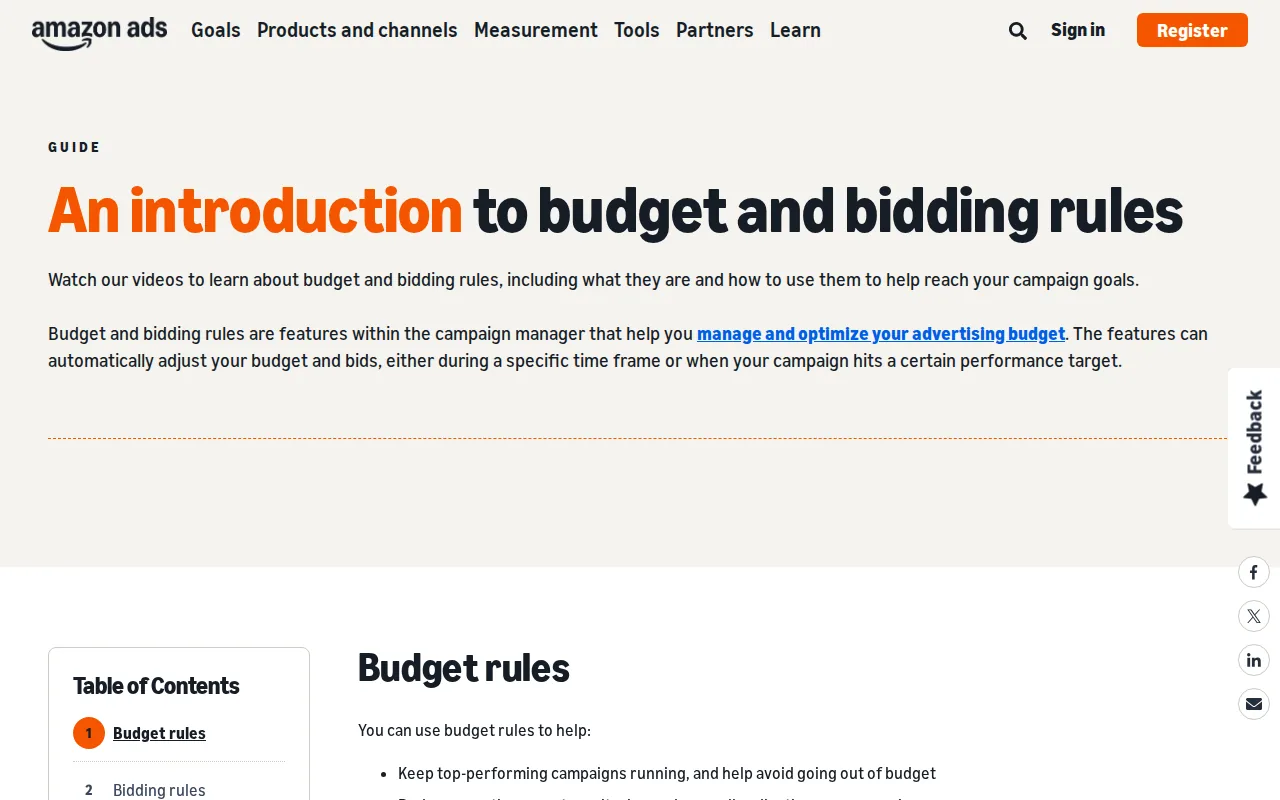
Because these rules live inside the console, there’s no separate subscription and no extra account access to grant. The trade-off is reach: they work campaign by campaign, there’s no keyword harvesting across the account and no cross-marketplace view. For a single-marketplace seller with a handful of campaigns, that’s often enough.
Key Takeaway: Set up schedule and performance rules in the console first. If you outgrow them, you’ll know exactly which gap a paid tool has to fill.
2. Perpetua: AI-driven bids and keyword harvesting
Perpetua is ecommerce advertising software that pairs AI bid optimization with automated keyword harvesting. You give it a target, such as an ACOS goal, and it moves bids toward that number using your performance data. It also reports share of voice, so you can see how often your products show up against competing brands for the terms you care about.
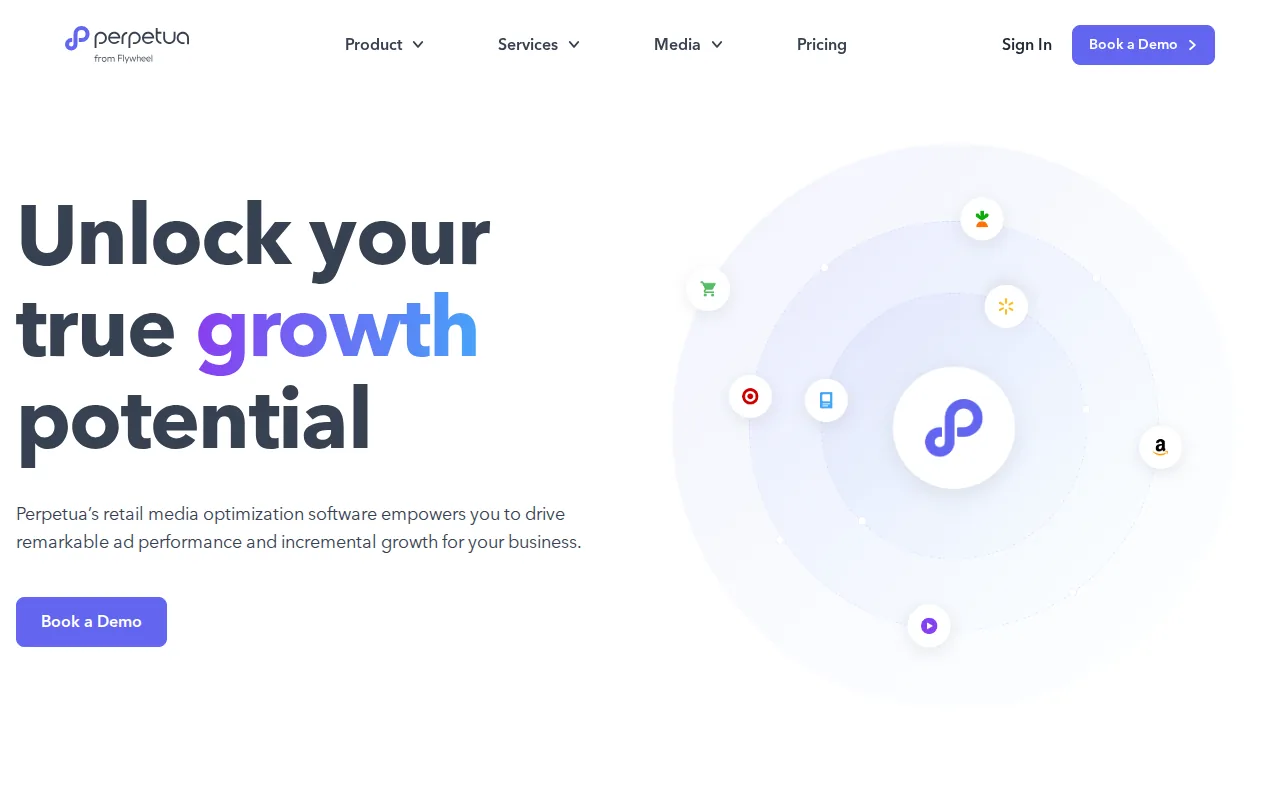
It suits brands with a steady ad budget across several ad types and someone in-house who owns the targets. Confirm the current plan and fee structure on Perpetua’s own pricing page before you connect an account.
Pro Tip: Pair Perpetua with a PPC manager who sets the goals. The AI follows the targets you give it, so vague targets get you vague results.
3. Teikametrics: Amazon and Walmart advertising coverage
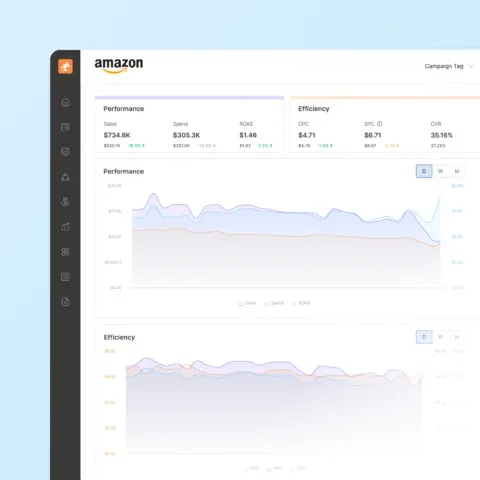
Teikametrics describes itself as an AI marketplace optimization platform, and its main draw is coverage of both Amazon and Walmart. You can run Sponsored Products, Sponsored Brands and Sponsored Display from one dashboard, with an AI bid engine doing the day-to-day adjustments and a chat-based assistant that answers reporting questions in plain English.
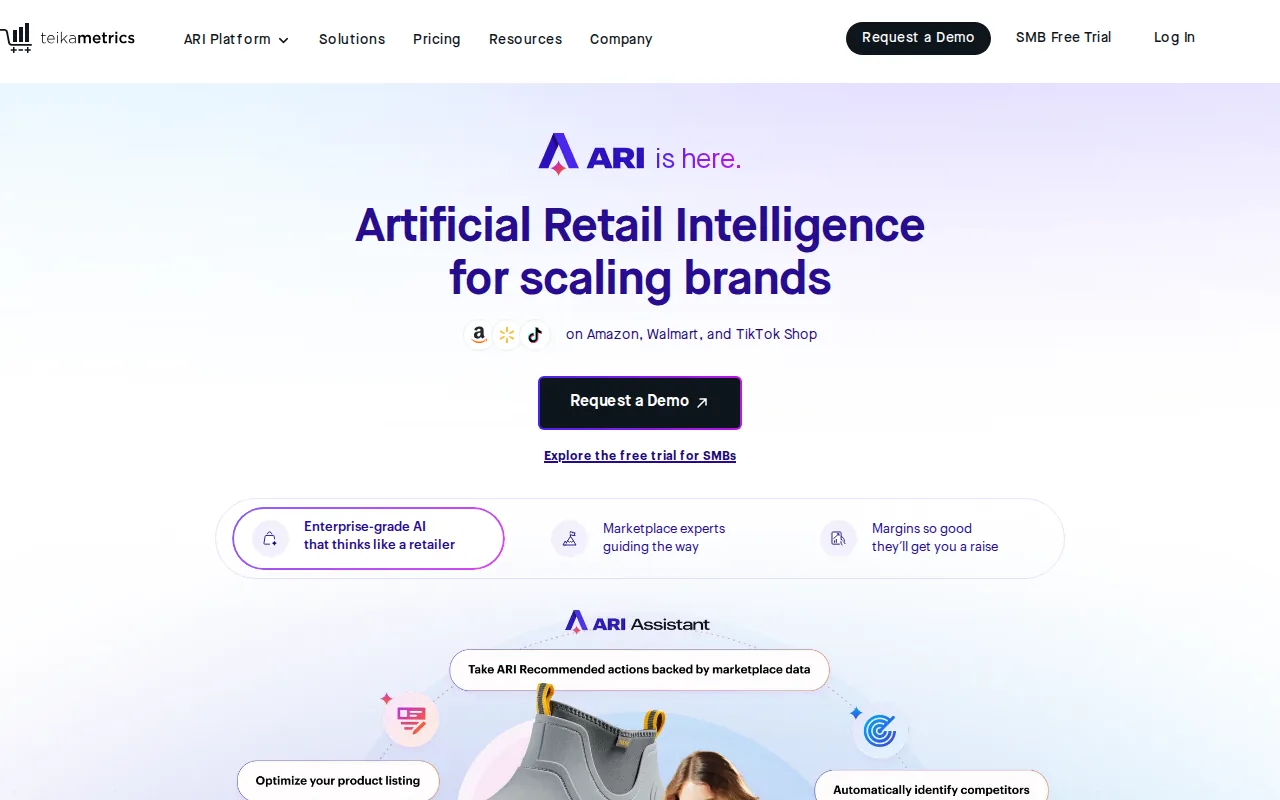
Higher tiers charge a fee tied to ad spend, so ask exactly how the fee scales and when it stops after you cancel. Brands already selling on Walmart get the most from the cross-channel view, and data-driven teams can pull the numbers into BigQuery for deeper analysis.
4. Pacvue: Multi-retailer advertising and data integrations
Pacvue sits at the enterprise end of the market. It brings Amazon, Walmart, Target, Instacart and Google Shopping into one interface, then layers AI agents on top of the reporting so you can push bid changes from Slack or the dashboard. It’s built for teams and agencies running many accounts across many retailers.
Pricing is quoted by Pacvue and tied to spend, so it adds up for high-budget advertisers. What you get for it is deep cross-channel reporting and a data pipeline that feeds Snowflake and BigQuery.
Who it’s for: If you run ads on several marketplaces and need one place for all the data, Pacvue gives you that, but expect a spend-based bill.
5. Scale Insights: Rule-based control across Amazon marketplaces
Scale Insights is for sellers who want to write their own rules rather than hand bids to a model. You stack its algorithms like building blocks, setting ACOS thresholds, dayparting schedules and automated keyword harvesting from one interface. Pricing follows the number of ASINs you automate rather than your ad spend, so the bill doesn’t climb as budgets grow.
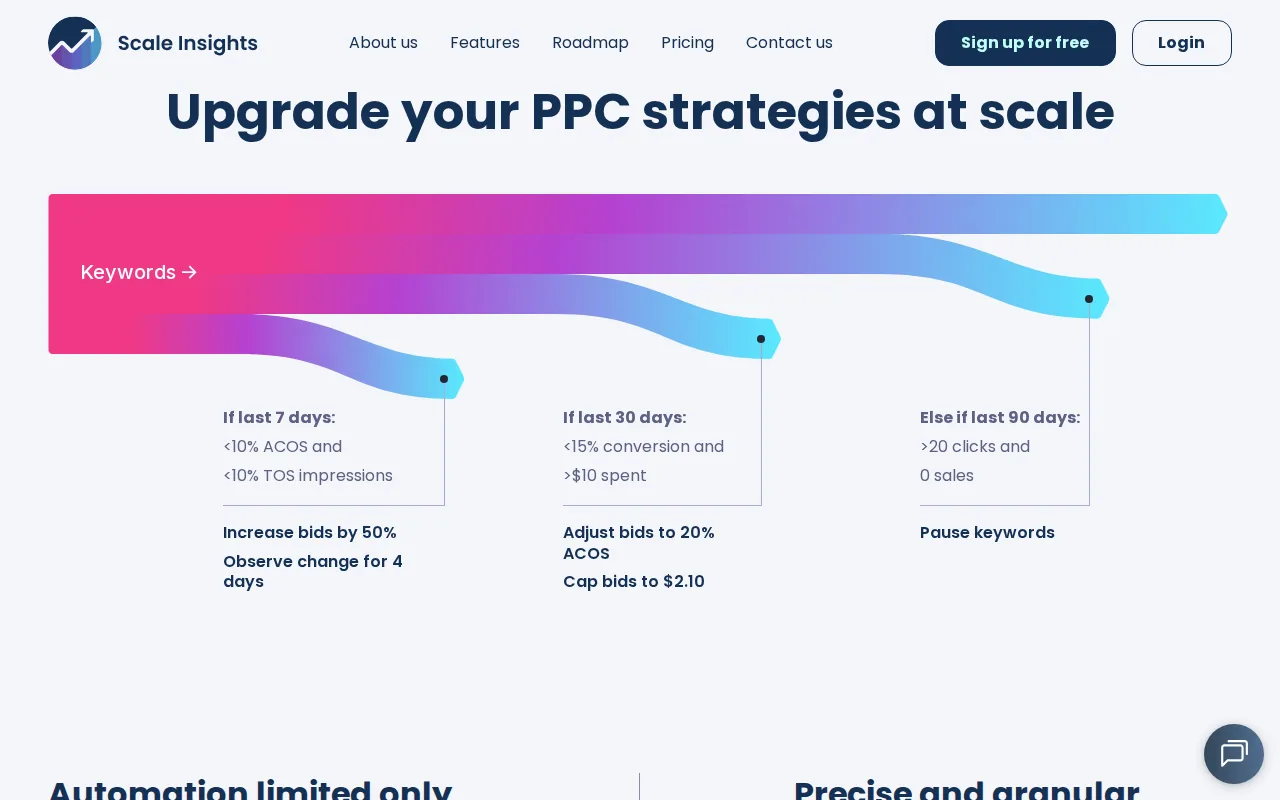
The rule engine lets you build if-then workflows that react to a performance window. A rule might raise bids when ACOS stays under your target for a week, or pause a keyword after a set number of clicks with no sale. For sellers with large catalogs, that level of detail cuts wasted spend.
Pro Tip: Start with a basic rule set, then add rules as you learn which ones move results in your category.
Which Amazon PPC software fits your team and ad setup?
It comes down to three things: how much you spend, who on your team owns the account, and whether you sell on more than one marketplace. A small single-marketplace seller can start with Amazon’s built-in rules. A team that wants hands-on control fits Scale Insights. Multi-retailer brands look at Teikametrics or Pacvue.
The table lines up each option’s core strength, pricing shape and best fit. If you’re still building your campaign structure, our Amazon PPC campaign guide covers keyword research and setup first.
| Tool | Core strength | Pricing model | Best for |
|---|---|---|---|
| Amazon Ads campaign manager | Schedule and performance rules for budgets and bids | Built into the console | Single-marketplace sellers with a few campaigns |
| Perpetua | AI-driven bids, share-of-voice reporting | Subscription, check current plans | Brands with an in-house PPC owner |
| Teikametrics | Amazon and Walmart in one dashboard, chat assistant | Spend-based fee on higher tiers | Sellers on both Amazon and Walmart |
| Pacvue | Enterprise data integration across retailers | Spend-based, quoted by Pacvue | Teams managing many accounts and retailers |
| Scale Insights | Stackable rules, dayparting | Flat rate by number of ASINs | Large catalogs that need detailed rule control |
If you’d rather not pick and run a tool yourself, our Amazon PPC management service handles both the platform choice and the day-to-day work. For a wider look at how agencies approach Amazon ads, see our Amazon PPC agency comparison.
What should you check before paying for Amazon PPC software?
Check four things before you connect your ad account: how the fee is charged and whether it grows with spend, who approves changes the tool makes, whether you can export your data if you leave, and how the fee is stopped when you cancel. A tool that saves less than it costs is a bad deal at any price.
Work out your numbers first. Our free break-even ROAS calculator shows the ROAS your margins need, which is the target any tool or rule should aim for. Then run a trial on a few campaigns, compare them with the ones you left alone, and only roll the tool out across the account once it beats your manual results.
Frequently asked questions
What is the difference between rule-based automation and AI-driven optimization?
Rule-based automation follows conditions you write, such as raising a bid when ACOS drops below your target. AI-driven tools use machine-learning models trained on your history to predict the best bid, so they can react to patterns you didn’t plan for, but you see less of the reasoning.
Do I need a large budget to use these platforms?
No. Amazon’s own budget and bidding rules come with the campaign manager, and Scale Insights prices by the number of ASINs rather than by spend. Spend-based tools such as Pacvue make more sense once your budget is large enough for the extra reporting to pay off.
Can I run ads on Walmart and Amazon from the same dashboard?
Yes. Teikametrics and Pacvue both support Amazon and Walmart, so you can manage sponsored ads on both marketplaces without switching between consoles.
How does pricing affect ROI?
Flat fees keep costs predictable, which makes true ROI easier to work out. Percentage-of-spend fees grow as you scale, so they eat into margin unless the tool’s automation saves more than it costs.
Is there a free trial I can use before committing?
It depends on the vendor, and trial terms change often. Ask each one before you connect your ad account, and ask in writing how billing stops when you cancel, especially for spend-based plans.
Choose a tool that matches your Amazon ad operation
Start with the budget and bidding rules already in Amazon’s campaign manager. When you need keyword harvesting or account-wide automation, add Scale Insights for hands-on control or Perpetua for AI bids. Move to Teikametrics or Pacvue once Walmart and other retailers are part of the plan.
Software is only half of it. With the right structure and daily management, one Amazon seller we worked with grew revenue 86% and net profit 310.7% in three months while TACOS fell from 20.41% to 13.48%. If you want the same kind of review on your account, contact our team.